Naik Automotive
Equipments
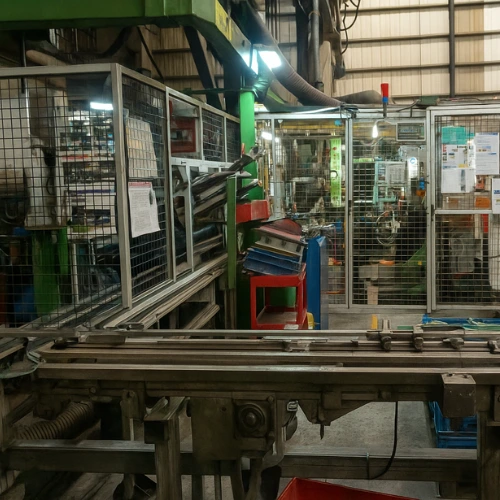
Stamping – Transfer System and progressive tools
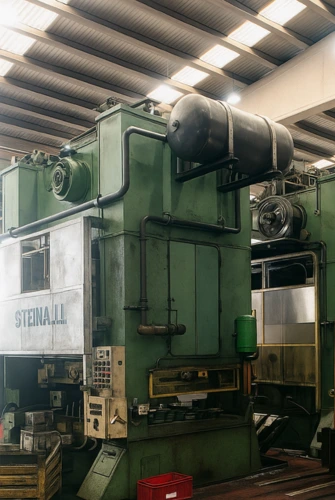
Naik Automotive performs Stamping of small and médium components of different types of materials , carbon Steel, stainless Steel an aluminium
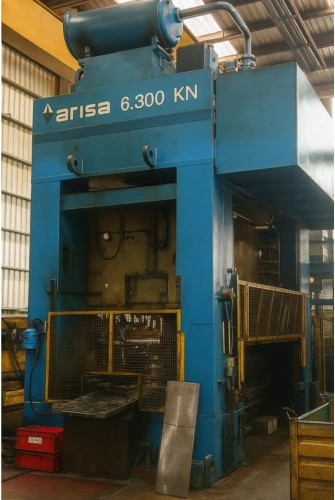
- Progresive preses up to 630 Ton
- Automatic transfer 400 Ton
- Conventional presses machine
A Pneumatic Power Press uses compressed air to drive a piston, delivering controlled force for stamping, punching, bending, and forming metal or non-metal parts, known for high speed, cleaner operation, simpler structure, and lower maintenance than mechanical presses.
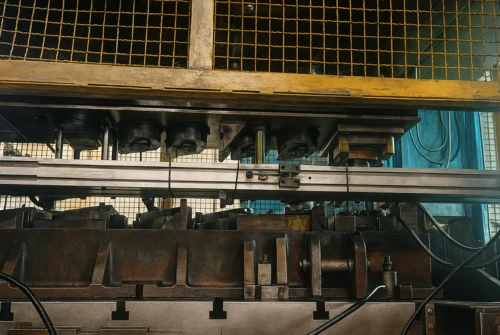
A progressive press is a high-speed machine tool used in metalworking and ammunition reloading, featuring multiple stations (dies) in sequence to perform various operations (blanking, piercing, forming, trimming, seating, etc.) on a single piece of material with each pull of the handle, significantly boosting efficiency for mass production or consistent ammo loading. In metal stamping, it uses a progressive die for continuous, complex part creation, while for reloading
Stamping – Automatic Transfer System
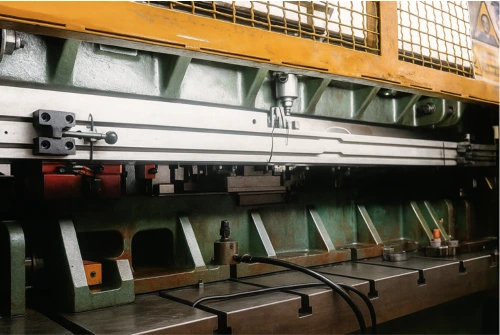
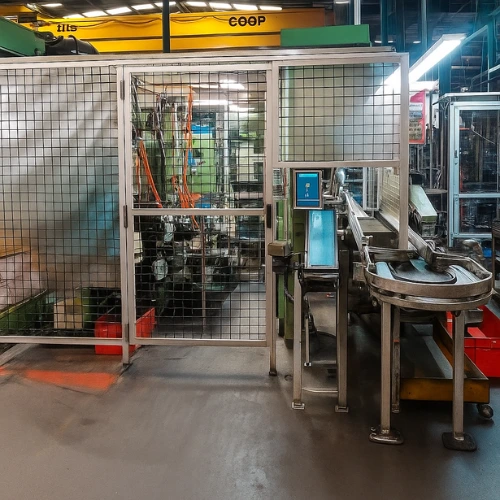
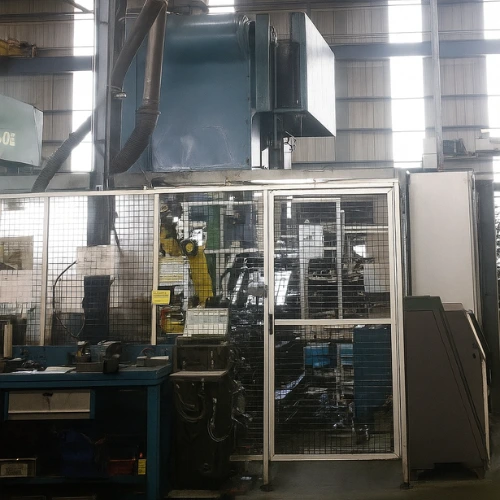
A stamping press transfer system automates moving metal parts between multiple stamping stations in a single press or line, using mechanisms like transfer bars, robot arms, and fingers to lift, move, and place workpieces, enabling high-speed, complex, multi-stage production for intricate parts like automotive components boosting efficiency over manual methods.
The process streamlines production by consolidating multiple operations into one integrated system:
- Material Feeding : A flat metal sheet or coil is fed into the first station. In a transfer system, the first station often cuts the initial blank.
- Stamping Operations : The press cycles. At each station, a specific operation (e.g., piercing, bending, drawing) is performed on the part currently in that station.
- Transferring : When the press opens, the automated transfer mechanism grips the individual parts, lifts them, moves them horizontally to the next station, and places them precisely into the next die.
- Ejection/Collection : Once all stations are complete, the finished part is ejected from the final station and collected, often undergoing integrated quality checks.
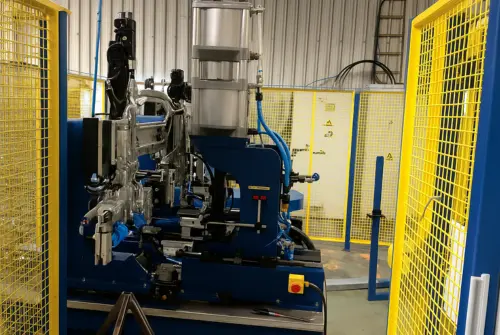
Welding – Resistance welding machines
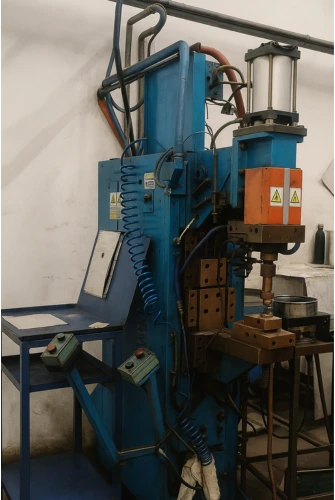
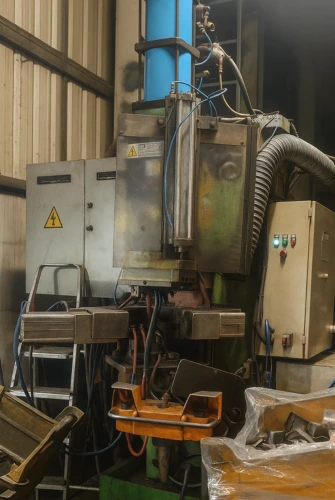
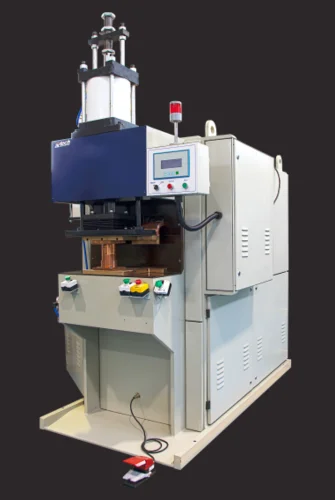
Resistance welding machines is devices that utilize copper electrodes to apply pressure and passing electrical current through the materials to be joined. The heat generated by the resistance to the flow of current melts and fuses the metals together
Resistance spot welding is a thermo-electric process where heat is generated at the interface of the parts to be welded by passing an electrical current through them for a precisely controlled time and under force. The “resistance” in the name resistance spot welding comes from the fact that the resistance of the workpieces and electrodes are used in combination or contrast to generate heat at their interface.
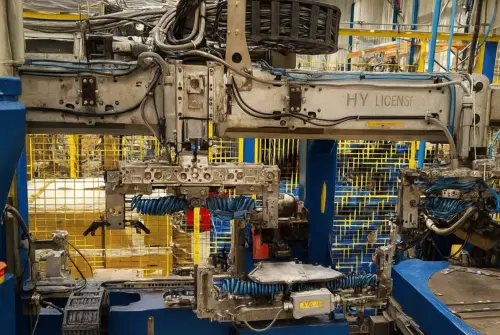
Welding – Automatic Resistance welding machines
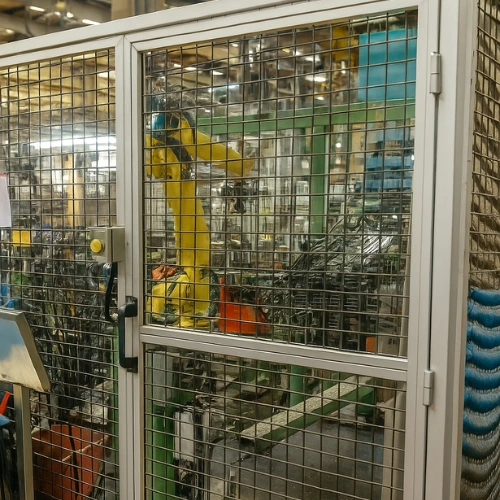
An automatic resistance welding machine uses high current, low voltage, and mechanical pressure to join metals, creating heat from electrical resistance at the contact point, ideal for high-volume, precise work like automotive parts, requiring no filler metal and offering speed, consistency, and integration with Industry 4.0 systems for quality control and data
Resistance welding is a fast process, making it ideal for high-volume production. It eliminates the need for external additional materials such as welding rods or flux, reducing both time and cost.


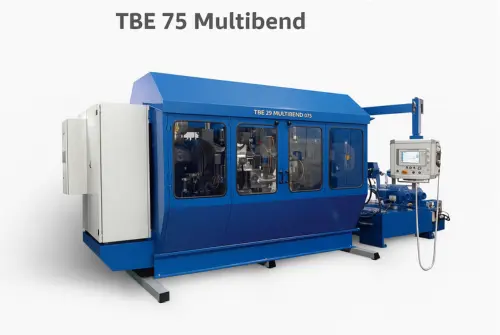
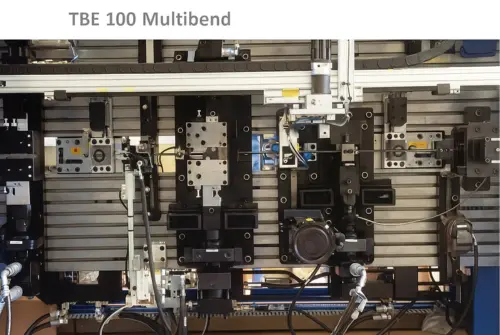
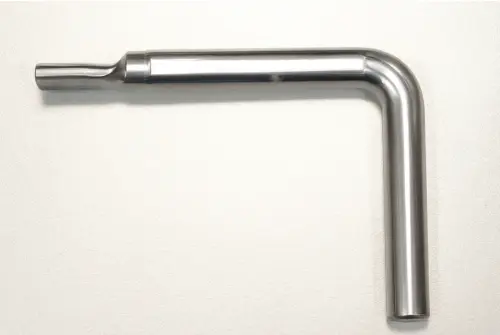
Wire Bending
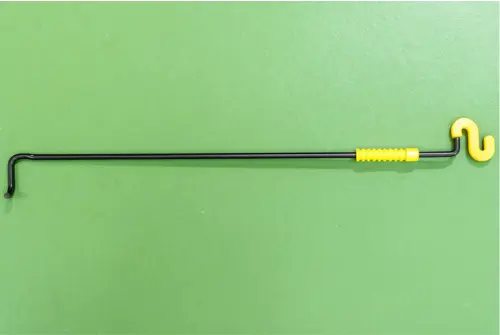
These machines are advanced manufacturing tools designed for precision, efficiency, and flexibility in producing various wire forms from coiled or bar material. Feature dynamic bending heads that can rotate freely around the material to achieve complex 2D and 3D forms, angles, hooks, and loops.
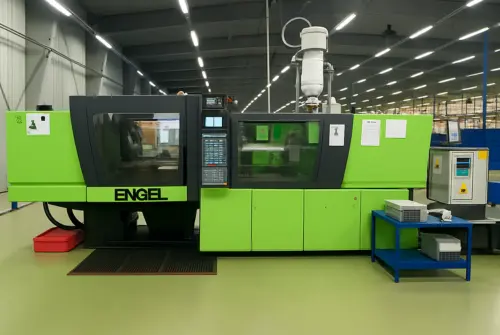
Over Molding Plastic Injection
Overmolding is an injection molding process used to mold one plastic (commonly a rubber-like plastic called TPE) over top of another component (substrate). The substrate is usually an injection-molded plastic part, but it could also be made from various other materials. Overmolding is used across several industries and serves a wide array of purposes. Below are a few examples of overmolding applications
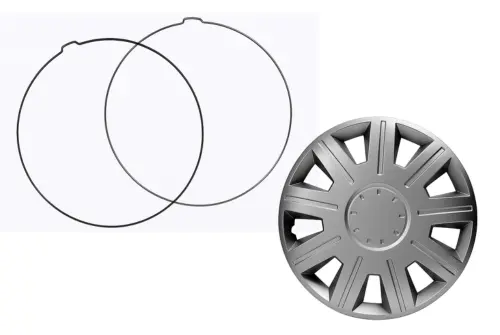
Projection welding machine
Projections (low thermal mass islands) are one method of insuring proper heat balance in difficult spot welding applications when there exists a 5:1 size difference between the parts to be welded. By providing a projection on the surface of one of the workpieces, weld current and force can be focused into the small area of the projection to produce heat at the desired weld location.
Projection welding can extend electrode life by increasing the electrode contact area and decreasing the current density at the surface of the electrode. Projection welding is effective even if the weldments are thick or when using conductive materials.